Harmonica Learning Roadmap: From Beginner to Professional
A sourced roadmap for learning the diatonic harmonica: what to study as a beginner, at intermediate and advanced level, and what professional players need.
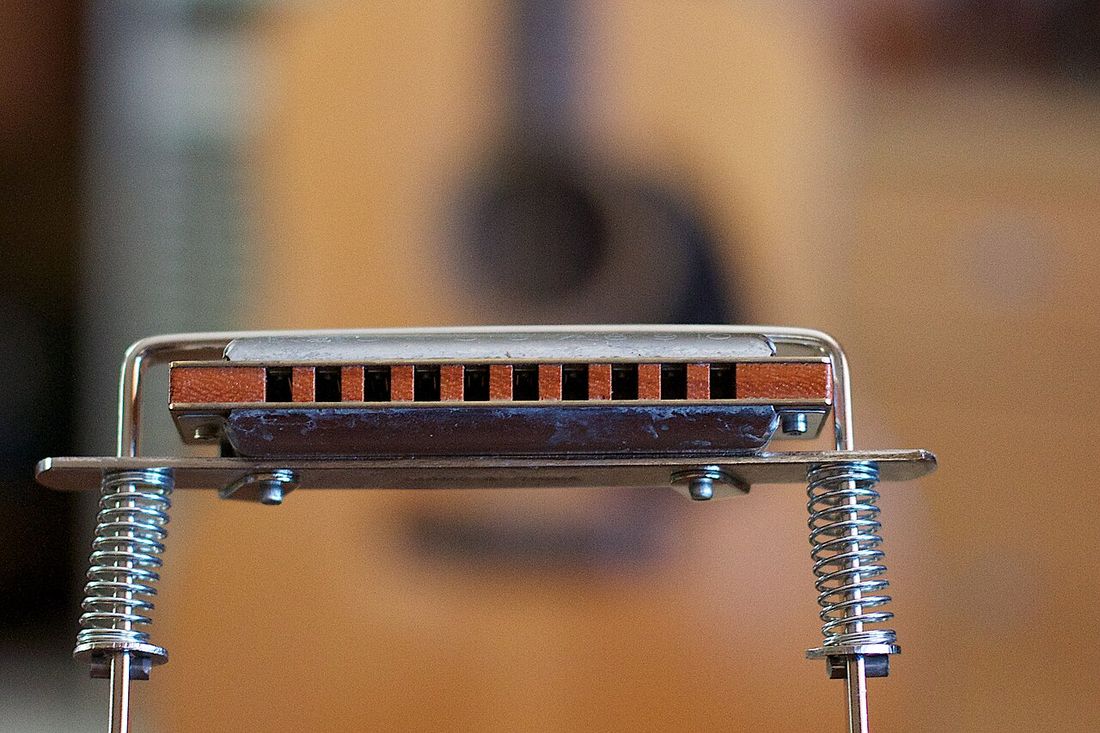
What should you learn first on the harmonica, what comes next, and how long does it all take? This roadmap sets out the usual order of study in three stages: beginner, intermediate to advanced, and professional. It is based on the published curricula of established teachers and organisations, which are listed at the end, and it notes where those teachers disagree.
The roadmap concerns the 10-hole diatonic harmonica. A short section near the end covers the chromatic.
How the stages are defined
There is no single official syllabus for the harmonica, but there are two useful reference points.
- David Barrett's Levels of Achievement. The American teacher David Barrett runs BluesHarmonica.com, whose curriculum has ten levels: Beginner (1 to 3), Intermediate (4 to 6), Advanced (7 to 9) and Professional (10). It is a blues curriculum, and the most detailed public one we know of.
- Graded exams. In 2022 the exam board RSL Awards (Rockschool), working with the charity HarmonicaUK, launched what HarmonicaUK describes as the world's first regulated graded qualifications in harmonica performance. At launch there were five grades: Premiere, Debut and Grades 1 to 3.
Other respected teachers arrange things differently. Winslow Yerxa's book Harmonica For Dummies and Adam Gussow's Modern Blues Harmonica lessons are both referred to below.
Stage 1: Beginner
Aim: a good basic sound, clean single notes, steady rhythm and your first bends.
What you learn, in the usual order
- Holding the harmonica and breathing. A relaxed grip, a relaxed mouth and gentle, low breathing. See how to hold a harmonica and breathing techniques.
- Chords and rhythm. Simple breathing patterns ("chugging") on the low holes, played in time. Barrett's first level includes metronome work from the start.
- Single notes. By lip pursing, tongue blocking or both.
- The major scale in the middle octave, holes 4 to 7, and simple tunes. See how to read harmonica tabs and our easy songs.
- Basic theory: note names, the layout of the instrument and the idea of positions.
- First bends. Usually the draw bend on hole 4. Gussow writes that for most beginners this is the easiest bend and the first he teaches. See how to bend notes.
- Simple accompaniment, such as the 12-bar blues.
Milestones
You are ready to move on when you can:
- play clean single notes and a major scale up and down;
- keep a steady rhythm with a metronome or backing track;
- play at least one complete tune from memory;
- produce a controlled draw bend on at least one hole;
- follow a 12-bar blues without losing your place.
How long does it take?
Estimates vary enormously with practice time and the individual. As one named reference point, Barrett says each of his three beginner levels takes about three months on average, which puts the beginner stage at roughly nine months for a student following his course. Gussow declines to give a figure at all, and says instead that twenty minutes a day, five days a week, is enough to make real progress.
Stage 2: Intermediate to advanced
Aim: control of every bend, a full and expressive tone, fluency in more than one position and the ability to improvise and accompany.
Intermediate skills
- All the draw bends in tune, including the two bends on hole 2 and the three on hole 3. See the note layout.
- Tongue-block techniques: slaps, pulls, flutters and octaves, also called splits. See tongue blocking vs lip pursing.
- Vibrato and tremolo, the wavering of pitch or volume that gives a note life.
- Scales in second position: the major pentatonic and blues scales.
- The major scale across the whole harmonica, which needs bends at the bottom and the reversed breathing pattern at the top.
- Accompaniment: playing fills and staying out of the way of a singer.
- Structured improvisation: building a solo from repeated and varied phrases, and then writing an instrumental of your own.
Advanced skills
- Precise half-step bends, and the chromatic scale on the lower holes using bends.
- Blow bends on holes 8 to 10, and first-position blues that depends on them.
- Third position and its minor sound.
- Wider tongue-block splits, bass lines and control of dynamics.
- Playing with a band: beginnings, breaks, endings and holding a groove.
- Amplified playing and recording yourself.
- Overblows and overdraws (optional; see below).
Milestones
- Every draw bend and blow bend sounds in tune when you play it directly, without sliding into it.
- You are fluent in second position and can play in first and third.
- You can improvise over a 12-bar blues with a clear shape, and accompany a singer.
- You have played through an amplifier and listened critically to recordings of yourself.
How long does it take?
Barrett's figure for his intermediate levels is about four months each. For all ten levels he suggests two years for an exceptionally dedicated and talented student and four years for an average one. We found no other named teacher who puts a number on the advanced stage, and these figures assume regular lessons and steady practice.
Stage 3: Professional
Aim: to be a musician other people want to hire, book or study with. At this level, technique is assumed. The difference lies in everything around it.
Barrett's final level illustrates the point. It asks for original compositions performed in front of an audience and published on video: instrumentals in first, second and third position, an unaccompanied solo piece and an example of accompaniment.
What working players need beyond technique
- Repertoire and preparation. A set list with the key of each song and the harmonica it needs.
- A full, working set of instruments. Every key the set calls for, in tune, with worn harmonicas repaired or replaced before the performance.
- Stagecraft. An organised place for your harmonicas on stage, rehearsal with the same microphone and amplifier you will use on the night, and a fallback such as playing through the vocal microphone if your equipment fails.
- Amplification. Understanding microphones, amplifiers and how hand technique shapes amplified tone.
- Instrument maintenance. Cleaning, adjusting reed gaps, retuning and replacing reed plates. See how to clean and maintain a harmonica.
- Band skills. Knowing when not to play, following a leader, and starting and ending songs cleanly.
- Recording. Delivering a usable performance in a studio, quickly.
- Original material and teaching. Many professionals combine performing with writing and with teaching.
The harmonica community
Festivals and societies are where players at every level meet, learn and are heard.
- SPAH, the Society for the Preservation and Advancement of the Harmonica, was founded in the United States in 1962. Its convention is held each August, with seminars, jam sessions and concerts.
- The World Harmonica Festival in Trossingen, Germany, the home of Hohner, has been held every four years since 1989, most recently in 2025. It includes international competitions, workshops and concerts.
- HarmonicaUK began in 1935, was known for many years as the National Harmonica League and is now a registered charity. It publishes the magazine Harmonica World and runs an annual festival that includes a competition.
Where teachers disagree
Tongue blocking or lip pursing first? Barrett teaches tongue blocking from the first lesson and says there is no need to learn to pucker at all. Gussow's beginner lessons start with lip pursing and treat tongue blocking as a later, separate topic. Yerxa's book presents both. Good players have come from each approach, so choose one, learn it well and add the other later.
When to start bending? Gussow introduces the hole 4 draw bend early. Barrett introduces bending at his second level and makes it a main subject at the third, some months in. Yerxa places it after single notes and tongue techniques. Everyone agrees that clean single notes come first.
Are overblows essential? Overblows and overdraws are advanced techniques that supply the notes bends cannot reach, making the diatonic fully chromatic. They are central to the teaching of Howard Levy, who pioneered their modern use. They do not appear in Barrett's blues curriculum at any level, and Yerxa treats them as a later, optional topic. Whether you need them depends on the music you want to play: for jazz and complex melodies in many keys they are valuable, and for traditional blues and folk they are not required.
How much should you practise?
Barrett's guidance is the most specific we found. He regards an hour a day as the standard for anyone learning an instrument, says half an hour a day brings slower but real progress, and describes ten minutes a day as enough only to maintain what you have learned. He adds that the great players typically practised for three hours or more a day over several years.
For most adult learners with jobs and families, a short, focused daily session is the realistic choice, and it works. Our 30-day practice plan is built on fifteen minutes a day.
Whatever time you have:
- practise daily in preference to occasionally;
- spend most of the session on what you cannot yet do;
- use a metronome or backing track;
- slow difficult passages down until they are correct;
- record yourself regularly and listen back.
What about the chromatic harmonica?
The roadmap above is for the diatonic. The chromatic harmonica follows a different path. Because the slide provides the sharps and flats, there is far less emphasis on bending, and far more on scales in every key, on reading music and on smooth slide technique. It is the usual choice for jazz and classical playing. See diatonic vs chromatic vs tremolo.
The roadmap at a glance
| Beginner | Intermediate to advanced | Professional | |
|---|---|---|---|
| Main aim | Good sound, single notes, first bends | Full control, expression, improvisation | Performing, recording, teaching |
| Key techniques | Breathing, single notes, major scale, hole 4 bend | All bends, tongue-block effects, vibrato, positions, blow bends | Everything, reliably, under pressure |
| Music | Simple tunes, basic 12-bar blues | Solos, fills, accompaniment, own instrumental | Full sets, original material |
| Equipment | One harmonica in C | Several keys, a microphone and amplifier | Complete set, backups, maintained by you |
| Barrett's estimate | About three months per level | About four months per intermediate level | Two to four years in total for all ten levels |
Sources
- David Barrett, BluesHarmonica.com: Levels of Achievement, and his answers on practice time and on how long the levels take. https://www.bluesharmonica.com/levels-of-achievement
- Adam Gussow, Modern Blues Harmonica: beginner lessons and beginner questions. http://www.modernbluesharmonica.com/beginning_harmonica.html
- Winslow Yerxa, Harmonica For Dummies, 2nd edition (Wiley).
- HarmonicaUK: history of the organisation, and its announcement of the Rockschool harmonica grades. https://www.harmonica.uk/pages/history
- RSL Awards: harmonica syllabus. https://www.rslawards.com/
- SPAH: convention information. https://spah.org/
- Hohner: World Harmonica Festival. https://hohner.de/
- Howard Levy's harmonica school at ArtistWorks. https://artistworks.com/howard-levy
Filed under: Learn