Tongue Blocking vs Lip Pursing: Which Should You Learn?
The two ways to play single notes on harmonica compared: how each embouchure works, what each is best at and which to learn first.
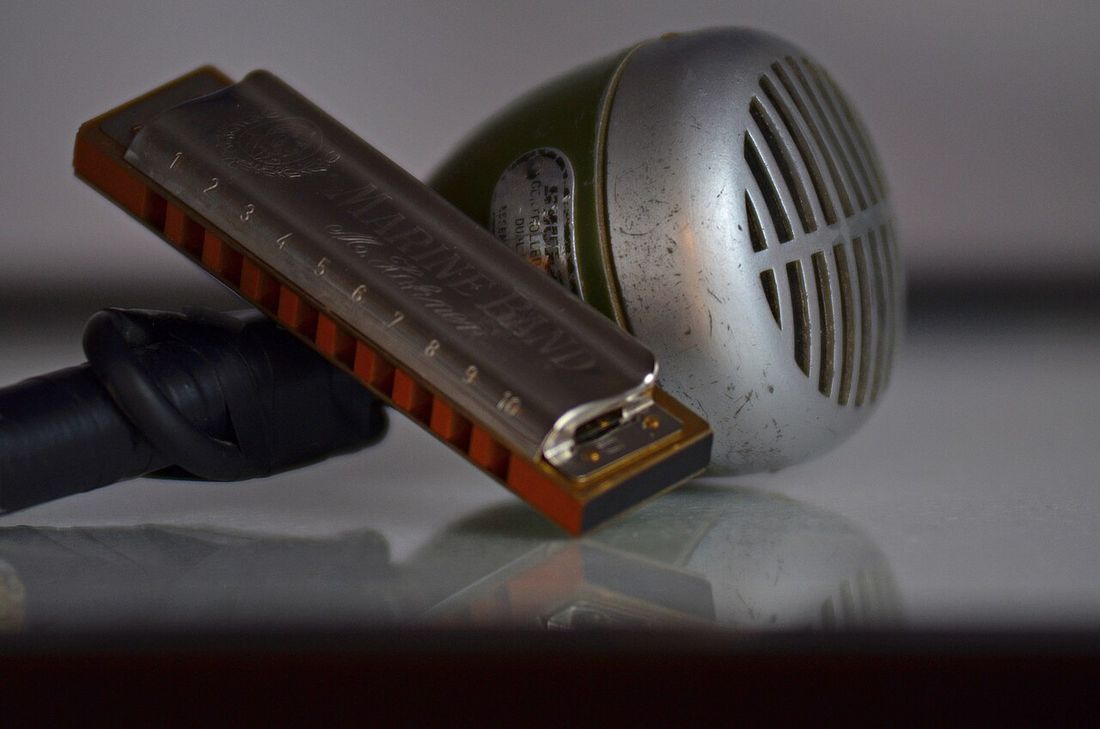
There are two main ways to play a single note on a harmonica. They are called embouchures, a word borrowed from brass and woodwind playing that means the way you shape your mouth on the instrument. Players argue about which is better. The honest answer is that each does things the other cannot, and most good players end up using both.
Lip pursing
Also called puckering or the lip block.
How it works: you narrow your lips until the opening covers a single hole, a little like whistling but with the harmonica deep inside your lips.
Advantages:
- Quick to learn. Most beginners get a single note within days.
- Bending feels more intuitive, because your tongue is free to move.
- Fast single-note melodies are comfortable.
Limitations:
- You cannot add chords underneath a melody.
- Octaves and other split intervals are not possible.
- If the lips are tense the tone can become thin.
Tongue blocking
How it works: you open your mouth to cover three or four holes, then lay your tongue on the harmonica to block the holes on the left. Air reaches only the hole at the right-hand corner of your mouth.
For example, to play hole 4: cover holes 1 to 4 with your mouth, then block holes 1, 2 and 3 with the flat front part of your tongue. Only hole 4 sounds.
Advantages:
- Slaps and pulls. Lift the tongue for an instant before each note and you hear a chord followed by the melody note. This gives the full, rhythmic sound of traditional blues harmonica.
- Octaves. Block the two middle holes of four and you play two notes an octave apart, such as holes 1 and 4 together.
- A big tone. The wide-open mouth and jaw act as a large resonating chamber.
- Self-accompaniment. You can vamp chords between melody notes, which fills out the sound when you play alone.
Limitations:
- It takes longer to learn, and feels awkward at first.
- Bending while tongue blocking is a separate skill that needs relearning.
Side-by-side comparison
| Lip pursing | Tongue blocking | |
|---|---|---|
| Time to first single note | Days | Weeks |
| Bending | Easier to start | Harder to start |
| Chords under the melody | No | Yes |
| Octaves | No | Yes |
| Typical styles | Melodic playing, folk, country, fast runs | Chicago blues, old-time, solo playing |
Which should a beginner learn first?
For most people, lip pursing first. You will play tunes sooner, and early success keeps you practising. Then add tongue blocking once single notes and simple melodies are secure, usually after a few months.
There is a respectable opposing view: some teachers start pupils on tongue blocking from the first lesson, on the grounds that it is easier to learn it early than to retrain later. If the sound you love is classic blues harmonica, that approach is worth considering.
Either way, you do not have to choose for life. The two techniques work together.
A first tongue blocking exercise
- Open your mouth wide enough to cover holes 1 to 4 and blow gently. You should hear a four-note chord.
- Keeping your lips where they are, touch the tip and front of your tongue to the harmonica so that it covers holes 1, 2 and 3. Aim the tongue slightly to the left.
- You should now hear hole 4 alone, sounding from the right corner of your mouth.
- Lift the tongue: chord. Replace it: single note. Repeat slowly.
(1 2 3 4) 4 (1 2 3 4) 4
That alternation of chord and note is the beginning of the slap technique. When it is steady on the blow, try it on the draw.
Common tongue blocking problems
- Two notes sounding. Your tongue is not covering enough holes, or your mouth is too wide. Adjust one at a time.
- No note at all. Your tongue is covering everything. Move it a little to the left.
- A leaky, breathy sound. Use the flat top of the tongue just behind the tip, not the point itself, to make a broad seal.
- Gagging. The harmonica is too deep. Bring it forward slightly; this eases with practice.
The bottom line
Lip pursing is the quickest route to playing melodies. Tongue blocking is the route to a bigger, richer, more rhythmic sound. Learn the first to get going, add the second to grow, and use whichever suits the phrase in front of you.
New to single notes altogether? Start with how to hold a harmonica and play single notes.
Filed under: Learn