Harmonica Positions Explained: First, Second and Third
What first, second and third position mean on the harmonica, when to use each and how to choose the right harmonica for a song's key.
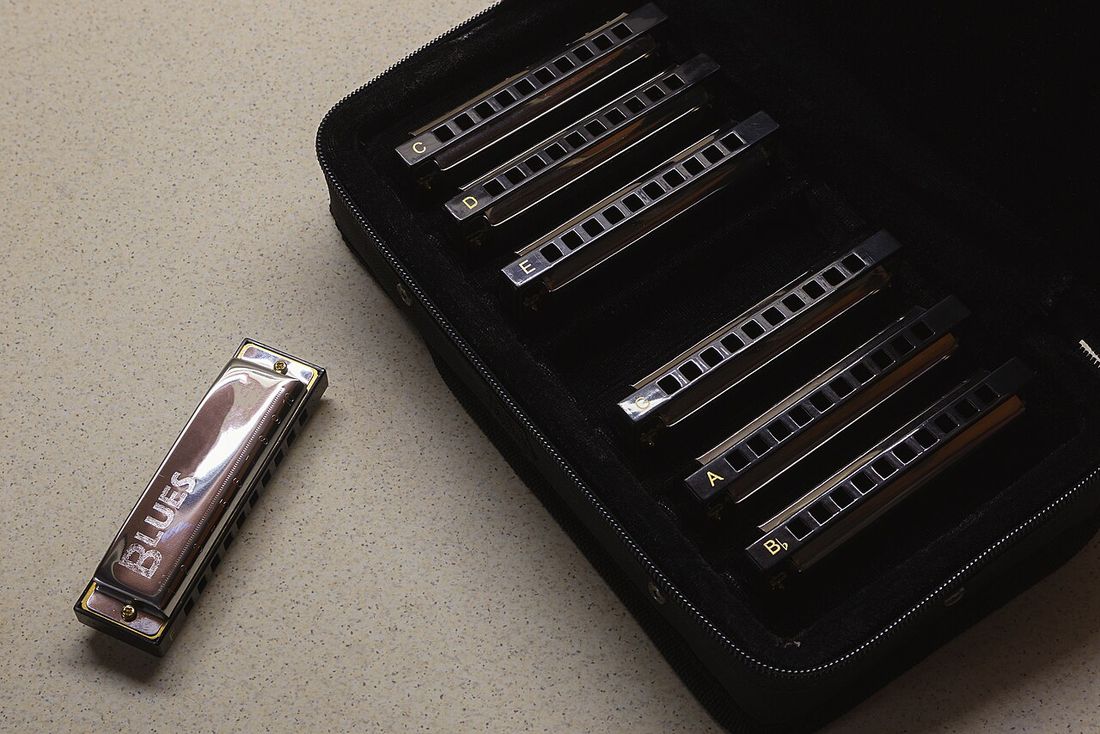
Sooner or later every harmonica player hears something like: "This song is in G, so use a C harp." That sounds wrong until you understand positions. A position is simply the key you choose to play in on a given harmonica. One harmonica can play in several keys, and each has its own sound.
This guide covers the three positions that account for the vast majority of harmonica music.
Why positions exist
A C harmonica contains the notes C, D, E, F, G, A and B. You can treat any of those notes as "home". Start and finish on C and you are playing in C major. Start and finish on G, using the same notes plus a few bends, and you are playing in G, with a bluesier flavour. The harmonica has not changed; your home note has.
First position: straight harp
Home note: hole 4 blow (also 1, 7 and 10 blow). Key on a C harmonica: C major.
First position means playing in the key stamped on the harmonica. The blow notes form the home chord, and the middle octave gives a complete major scale:
4 -4 5 -5 6 -6 -7 7
Sound: bright, sweet and melodic.
Use it for: folk songs, hymns, carols, nursery rhymes, campfire songs and most traditional melodies. Nearly all the beginner tabs on this site are in first position.
Second position: cross harp
Home note: hole 2 draw (also 3 blow, 6 blow and 9 blow). Key on a C harmonica: G.
Second position puts the home chord on the draw notes of holes 1 to 4. This matters for two reasons. Draw notes can be bent on the lower holes, so the most expressive notes sit right on your home chord. And the scale naturally includes a flattened seventh note, the F on hole 5 draw, which is the characteristic sound of blues and rock.
A basic second position scale on a C harmonica:
-2  -3  4  -4  5  -5  6
G    B  C   D  E   F  G
Sound: gritty, soulful and bluesy.
Use it for: blues, rock, country and most of the harmonica playing you hear on records. If you want that wailing sound, this is the position.
Third position: slant harp
Home note: hole 4 draw (also 1 and 8 draw). Key on a C harmonica: D minor.
Third position starts on the draw note of hole 4. Without any bends at all, the middle octave gives a minor-sounding scale known as the Dorian mode:
-4  5  -5  6  -6  -7  7  -8
D   E   F  G   A   B  C   D
Sound: dark, haunting and minor.
Use it for: minor-key blues, and many traditional British and Irish tunes. Scarborough Fair and Drunken Sailor both sit perfectly in third position with no bends required.
Choosing the right harmonica for a song
If you know the key of the song and the position you want, this table tells you which harmonica to pick up.
| Song key | First position harp | Second position harp | Third position harp (song is minor) |
|---|---|---|---|
| C | C | F | B flat |
| D | D | G | C |
| E | E | A | D |
| F | F | B flat | E flat |
| G | G | C | F |
| A | A | D | G |
| B flat | B flat | E flat | A flat |
Rules of thumb:
- Second position: count up four notes from the key of the song. A song in E: E, F, G, A. Use an A harmonica.
- Third position: go down one whole step from the key of the song. A song in D minor: use a C harmonica.
Because so much guitar-based blues is in E, A and G, the most useful harmonicas for playing with a band are A, D and C, in that order.
Which should you learn first?
Start with first position. It teaches you where the notes are and lets you play recognisable tunes at once. Once you can play clean single notes and a few melodies, begin second position, which opens the door to blues and to bending. Leave third position until you are comfortable with the first two, unless you are drawn to minor folk tunes, in which case it is surprisingly approachable.
Are there more positions?
Yes. There are twelve in theory, one for each key. Fourth position gives a natural minor key (A minor on a C harmonica) and fifth position another minor flavour. Advanced players use them, but first, second and third will serve you for years.
Next steps
- Try second position in practice with our 12-bar blues lesson.
- Look up the notes of any harmonica in our keys chart.
- Not sure which harmonica to buy next? Read which key to buy first.
Filed under: Learn