Diatonic vs Chromatic vs Tremolo Harmonica: Which Is Right for You?
The three main types of harmonica compared: how each works, what music it suits, how hard it is to learn and which a beginner should buy.
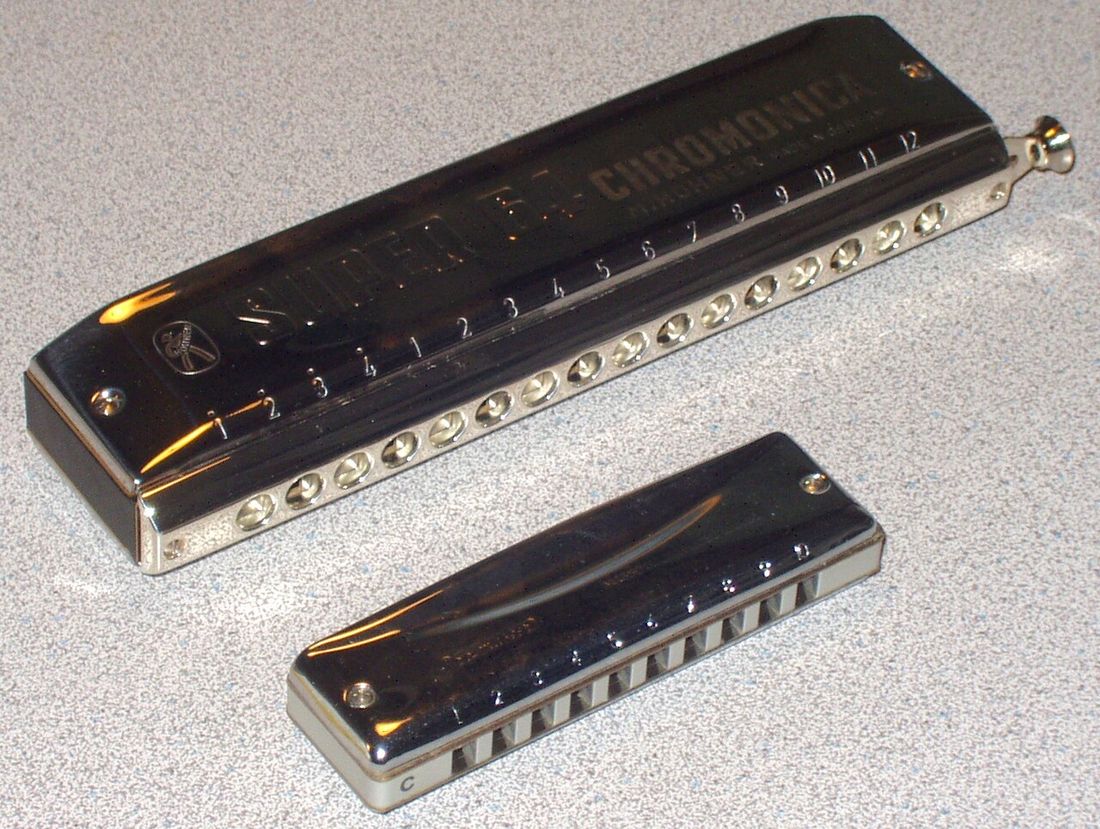
Walk into a music shop and you will find harmonicas of very different sizes and prices. They are not interchangeable. The three main families, diatonic, chromatic and tremolo, are built differently, sound different and suit different music. This guide explains each so that you buy the right one.
The short answer
If you are a beginner and you want to play folk, blues, rock, country or pop, buy a 10-hole diatonic harmonica in the key of C. It is the least expensive, the most widely taught, and the instrument that every tab on this site is written for.
Read on if you want to know why, or if your musical taste points elsewhere.
Diatonic harmonica
Also called the blues harp, or simply the 10-hole harmonica.
How it works: ten holes, each with one blow reed and one draw reed, giving 20 notes over three octaves. It is tuned to the notes of one major key. A C harmonica gives you the white notes of the piano and no sharps or flats, unless you bend.
Sound: warm, punchy and expressive. Bending notes gives it the crying, vocal quality that people think of as "the harmonica sound".
Best for: blues, rock, folk, country, pop, and traditional British and Irish music.
Strengths:
- Small and inexpensive.
- Chords are built in, so it is easy to accompany yourself.
- Bends give enormous expression.
- By far the largest supply of lessons, tabs and teachers.
Limitations:
- One harmonica plays comfortably in only a few keys, so players build up a set.
- Some notes are missing and must be bent, which takes practice.
See the full note layout.
Chromatic harmonica
How it works: a chromatic harmonica has a spring-loaded button on one end. With the button out you get the notes of a C major scale. Press the button in and every note rises by a semitone, giving you the sharps and flats. Between the two settings you have every note, like the white and black keys of a piano.
Common sizes are 12 holes, covering three octaves, and 16 holes, covering four.
Sound: smooth, clear and rounded, less gritty than a diatonic.
Best for: jazz, classical music, film themes, ballads and any tune with many sharps and flats.
Strengths:
- One instrument plays in every key.
- All notes are available without bending.
- The layout repeats identically in every octave.
Limitations:
- Larger, heavier and considerably more expensive.
- Uses more breath and needs more maintenance.
- Deep bends and chords are limited, so it does not suit the classic blues sound.
Tremolo harmonica
How it works: a tremolo harmonica has two reeds for every note, tuned very slightly apart. When both sound together the tiny difference in pitch produces a shimmering, wavering effect. The holes are arranged in two rows, and you normally play both rows at once. Blow and draw notes sit in separate, alternating holes.
Sound: sweet, bright and shimmering, a little like an accordion.
Best for: traditional folk melodies, and the music of East Asia, where the tremolo is the most popular type. It is also heard in Scottish and Irish folk music.
Strengths:
- A rich, full sound on simple melodies with very little effort.
- Usually inexpensive.
Limitations:
- Notes cannot be bent in any practical way.
- Like a diatonic, each instrument is tuned to one key.
- The layout differs from a 10-hole diatonic, so tabs are not interchangeable.
Comparison at a glance
| Diatonic | Chromatic | Tremolo | |
|---|---|---|---|
| Typical holes | 10 | 12 or 16 | 16 to 24 double holes |
| Plays in all keys? | No, a few per harp | Yes | No |
| Bending | Yes, central to the style | Slight only | No |
| Sound | Warm, gritty, expressive | Smooth and clear | Shimmering |
| Typical music | Blues, folk, rock, country | Jazz, classical, ballads | Folk melodies |
| Cost | Low | High | Low to medium |
| Beginner friendly | Very | Moderately | Fairly |
Other types you may see
- Octave harmonicas resemble tremolos, but the paired reeds are tuned an octave apart for a full, organ-like sound.
- Bass and chord harmonicas are large specialist instruments used in harmonica groups.
- Miniature harmonicas with four holes are novelties, playable but very limited.
Which should you choose?
- You want to play the blues, or you are not sure: diatonic in C.
- You want jazz standards or classical pieces and you can read music: chromatic.
- You mainly want gentle folk tunes with a rich sound: tremolo.
Many players eventually own all three. But the diatonic is the natural place to begin, and the skills you build on it, breath control, single notes and a good ear, carry over to the others.
Ready to buy? Read which harmonica key to buy first.
Filed under: Guides