Harmonica Keys Chart: Notes and Positions for All 12 Keys
A complete reference chart for diatonic harmonicas: which key each harmonica plays in first, second and third position, plus full note layouts.
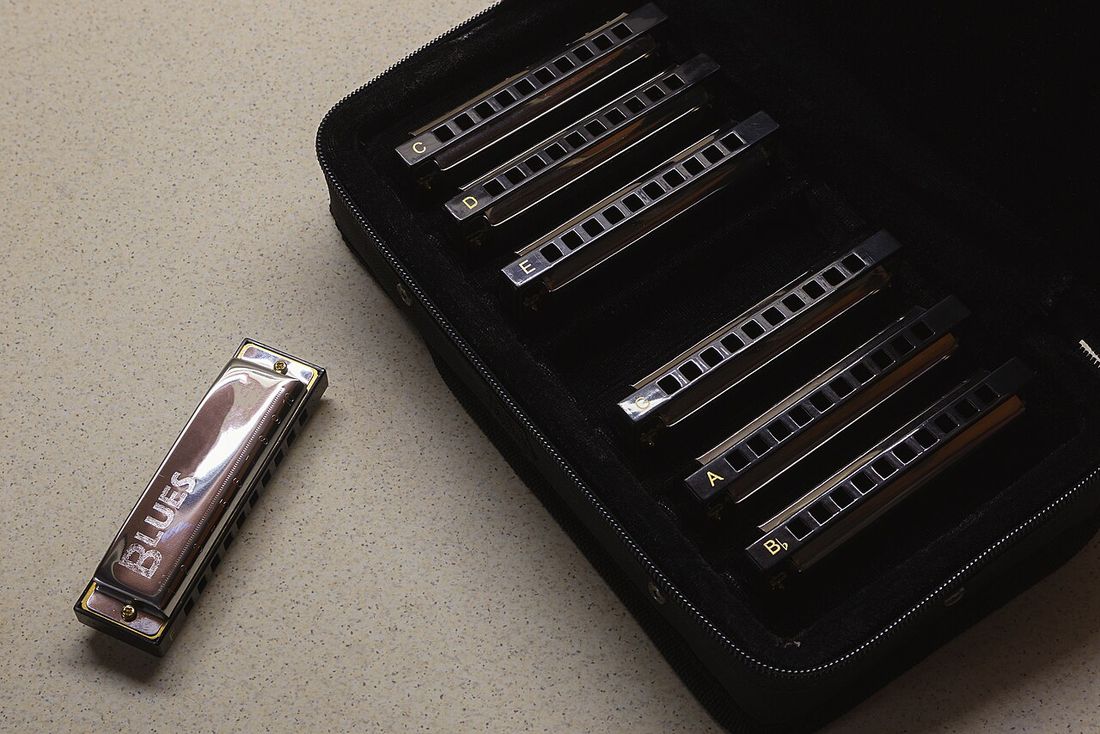
This page is a reference. Use it to find which harmonica you need for a song, or which notes a particular harmonica gives you. If positions are new to you, read harmonica positions explained first.
Positions chart: which key does each harmonica play in?
Find your harmonica in the left-hand column. The other columns show the key you will be playing in for each position.
| Harmonica key | 1st position (major) | 2nd position (blues) | 3rd position (minor) |
|---|---|---|---|
| G | G | D | A minor |
| A flat | A flat | E flat | B flat minor |
| A | A | E | B minor |
| B flat | B flat | F | C minor |
| B | B | F sharp | C sharp minor |
| C | C | G | D minor |
| D flat | D flat | A flat | E flat minor |
| D | D | A | E minor |
| E flat | E flat | B flat | F minor |
| E | E | B | F sharp minor |
| F | F | C | G minor |
| F sharp | F sharp | C sharp | G sharp minor |
The harmonicas are listed from the lowest-pitched, G, to the highest, F sharp, which is how they are usually arranged in a case.
Reverse chart: which harmonica do I need for this song?
Find the key of the song in the left-hand column.
| Song key | For a major melody (1st position) | For blues or rock (2nd position) | For a minor song (3rd position) |
|---|---|---|---|
| C | C | F | B flat |
| D flat | D flat | F sharp | B |
| D | D | G | C |
| E flat | E flat | A flat | D flat |
| E | E | A | D |
| F | F | B flat | E flat |
| F sharp | F sharp | B | E |
| G | G | C | F |
| A flat | A flat | D flat | F sharp |
| A | A | D | G |
| B flat | B flat | E flat | A flat |
| B | B | E | A |
Quick rules:
- Second position: take the harmonica a fourth above the song's key. Count four letter names up, including the first: for E, count E, F, G, A.
- Third position: take the harmonica one whole step below the song's key.
Note layout: the pattern behind every key
Every standard diatonic harmonica uses the same arrangement, called Richter tuning. Described in scale degrees, where 1 is the key note of the harmonica:
| Hole | 1 | 2 | 3 | 4 | 5 | 6 | 7 | 8 | 9 | 10 |
|---|---|---|---|---|---|---|---|---|---|---|
| Blow | 1 | 3 | 5 | 1 | 3 | 5 | 1 | 3 | 5 | 1 |
| Draw | 2 | 5 | 7 | 2 | 4 | 6 | 7 | 2 | 4 | 6 |
The blow notes always spell the major chord of the harmonica's key.
Note layouts for the most common keys
C harmonica
| Hole | 1 | 2 | 3 | 4 | 5 | 6 | 7 | 8 | 9 | 10 |
|---|---|---|---|---|---|---|---|---|---|---|
| Blow | C | E | G | C | E | G | C | E | G | C |
| Draw | D | G | B | D | F | A | B | D | F | A |
G harmonica
| Hole | 1 | 2 | 3 | 4 | 5 | 6 | 7 | 8 | 9 | 10 |
|---|---|---|---|---|---|---|---|---|---|---|
| Blow | G | B | D | G | B | D | G | B | D | G |
| Draw | A | D | F# | A | C | E | F# | A | C | E |
A harmonica
| Hole | 1 | 2 | 3 | 4 | 5 | 6 | 7 | 8 | 9 | 10 |
|---|---|---|---|---|---|---|---|---|---|---|
| Blow | A | C# | E | A | C# | E | A | C# | E | A |
| Draw | B | E | G# | B | D | F# | G# | B | D | F# |
D harmonica
| Hole | 1 | 2 | 3 | 4 | 5 | 6 | 7 | 8 | 9 | 10 |
|---|---|---|---|---|---|---|---|---|---|---|
| Blow | D | F# | A | D | F# | A | D | F# | A | D |
| Draw | E | A | C# | E | G | B | C# | E | G | B |
F harmonica
| Hole | 1 | 2 | 3 | 4 | 5 | 6 | 7 | 8 | 9 | 10 |
|---|---|---|---|---|---|---|---|---|---|---|
| Blow | F | A | C | F | A | C | F | A | C | F |
| Draw | G | C | E | G | Bb | D | E | G | Bb | D |
B flat harmonica
| Hole | 1 | 2 | 3 | 4 | 5 | 6 | 7 | 8 | 9 | 10 |
|---|---|---|---|---|---|---|---|---|---|---|
| Blow | Bb | D | F | Bb | D | F | Bb | D | F | Bb |
| Draw | C | F | A | C | Eb | G | A | C | Eb | G |
How to use a tab with a different key
Tabs give hole numbers, not note names. If a tab is written for a C harmonica and you play it on a G harmonica, you use exactly the same holes and breath directions. The tune comes out the same, only lower. This is useful when:
- a singer finds the song too high or too low;
- you want to play along with a recording in another key;
- you simply prefer the sound of a lower or higher harmonica.
Related guides
- Diatonic harmonica note layout, including all the bent notes.
- Which harmonica key to buy first.
Filed under: Guides