Hohner Special 20 Review: The Standard Beginner Recommendation
Hohner Special 20 review: design, build, strengths and weaknesses of the plastic-comb diatonic harmonica most teachers recommend to beginners.
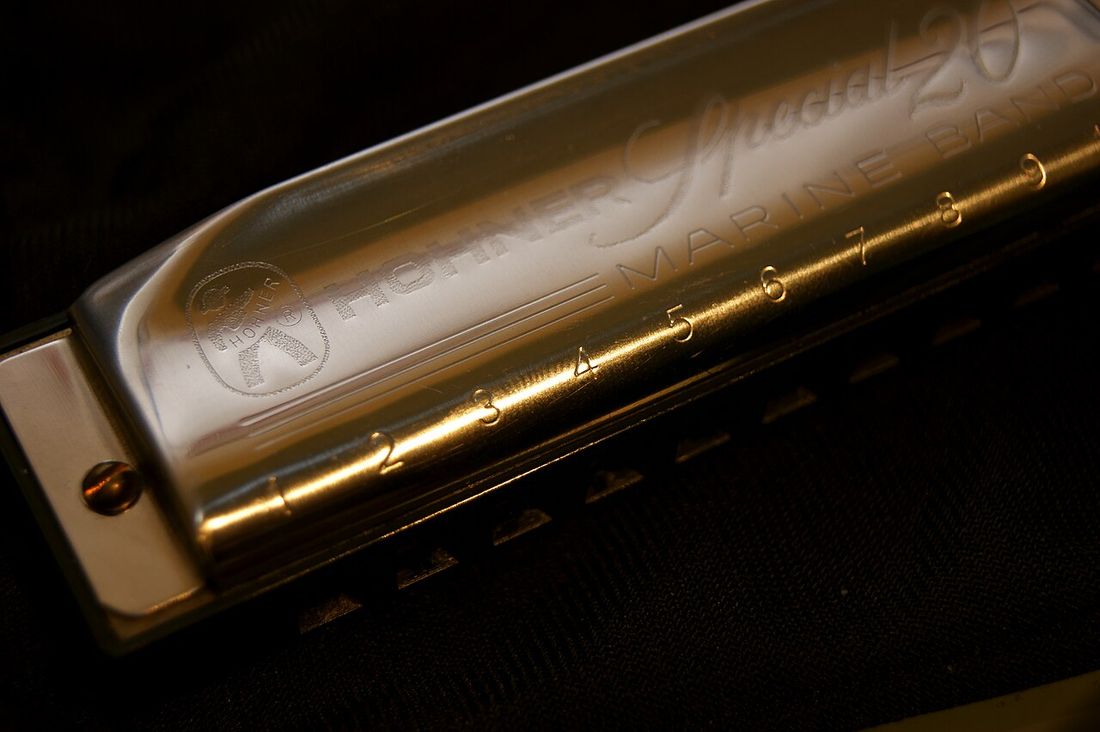
Ask a harmonica teacher which instrument to buy first and the Hohner Special 20 is one of the names you are most likely to hear. This review looks at how it is built, what that means for a player, and who it suits.
At a glance
| Type | 10-hole diatonic, Richter tuning |
| Maker | Hohner (Germany) |
| Comb | Plastic |
| Reeds | Brass |
| Reed plates | Recessed into the comb |
| Assembly | Screws |
| Keys | All twelve, plus low and high versions |
| Best for | Beginners; blues, rock, folk and country |
What it is
The Special 20 appeared in the 1970s and changed the way harmonicas were made. Until then most quality harmonicas had wooden combs with the reed plates fixed on top, leaving metal edges exposed to the lips. The Special 20 used a moulded plastic comb with the reed plates sunk into it, so that the mouthpiece is one smooth plastic surface. Many later harmonicas from other makers follow the same idea.
Design and build
Comb. The plastic comb does not absorb moisture, so it cannot swell or crack as an unsealed wooden comb can. It is also easy to keep clean.
Recessed reed plates. Because the plates sit inside the comb, your lips touch plastic and the cover plates, not the edges of the brass plates. This makes the instrument comfortable for long sessions and for sliding quickly between holes.
Covers. The stainless steel covers are closed at the sides and have a fairly narrow opening at the back. This gives a warm, slightly mellow, focused tone.
Assembly. Covers and reed plates are held with screws, so the harmonica can be taken apart for cleaning and put back together without special tools.
What the design means for playing
A plastic comb with recessed plates is naturally airtight, and airtightness is what a beginner needs most: notes sound with little breath, and single notes and bends are easier to find. The smooth mouthpiece is kind to the lips.
The closed covers make it a little quieter and darker in tone than open-sided designs such as the Hohner Marine Band or the Hohner Rocket. Players who want a bright, cutting sound for playing unamplified with a band sometimes prefer those.
Strengths
- Comfortable, smooth mouthpiece.
- Airtight and responsive, which helps with bending.
- Moisture-proof comb that needs little care.
- Can be dismantled with a screwdriver.
- Available in every key, so you can build a matching set.
Weaknesses
- Mellower and less loud than open-backed designs.
- Costs more than entry-level harmonicas.
- Replacement reed plates are available but are not as cheap or as central to the design as on the Lee Oskar.
Who should buy it
The Special 20 suits almost any beginner who is prepared to pay a little more than the minimum for an instrument that will not hold them back. It is equally at home as a working harmonica for experienced players, many of whom never move on from it.
Alternatives to consider
- Lee Oskar Major Diatonic - similar concept, with easily replaced reed plates.
- Hohner Rocket - the same family, louder and brighter.
- Hohner Marine Band 1896 - the traditional wooden-comb sound.
See also our round-up of the best harmonicas for beginners.
Filed under: Reviews Diatonic Harmonica Reviews