Hohner Marine Band 1896 Review: The Original Blues Harp
Hohner Marine Band 1896 review: the classic wooden-comb harmonica behind the sound of blues. Design, tone, drawbacks and who should buy one.
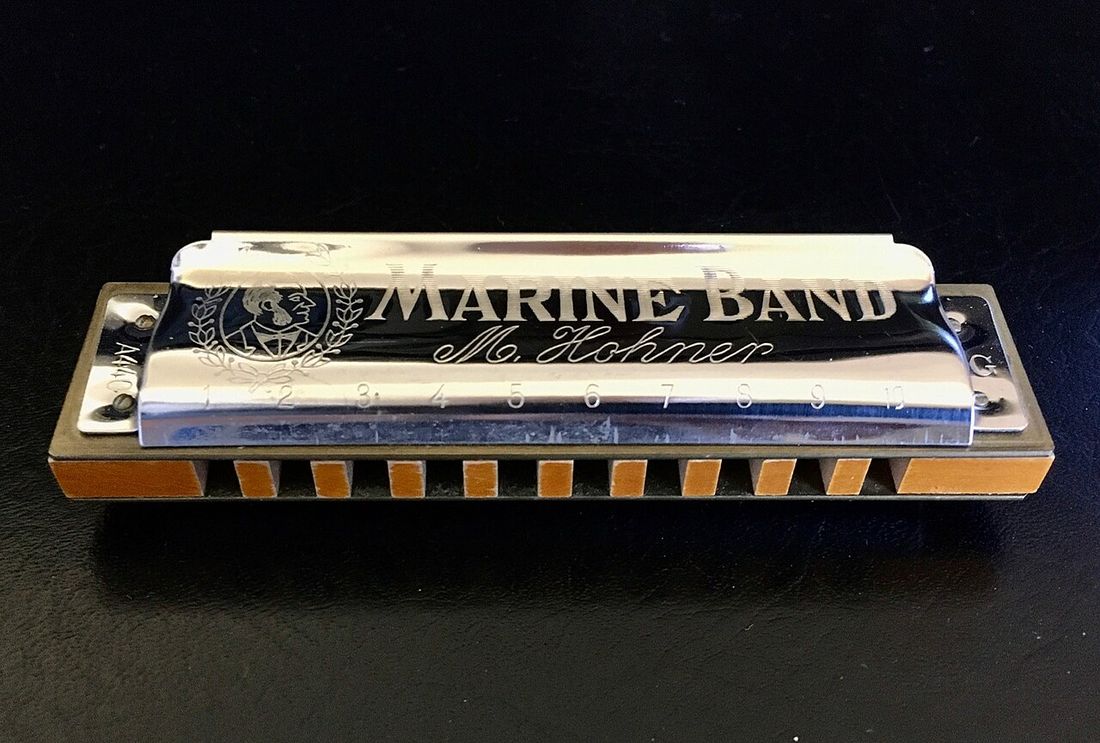
The Marine Band is the harmonica that most other harmonicas are measured against. It has been in production since 1896, and it is the instrument heard on a great many classic blues, folk and rock recordings. This review looks at what makes it distinctive and whether it is a sensible choice today.
At a glance
| Type | 10-hole diatonic, Richter tuning |
| Maker | Hohner (Germany) |
| Comb | Pearwood |
| Reeds | Brass |
| Reed plates | Mounted on top of the comb |
| Assembly | Nails |
| Keys | All twelve, plus low and high versions |
| Best for | Players who want the traditional blues and folk tone |
What it is
The Marine Band's design has changed remarkably little in well over a century: a pearwood comb, two brass reed plates fixed to it, and two cover plates with open sides. It is the template from which the modern diatonic harmonica grew.
Design and build
Comb. The comb is pearwood. Wood is the traditional material, and many players feel it contributes to the instrument's tone. Its weakness is moisture: wood can swell when wet. Combs on current production are sealed to reduce this, but a wooden comb still deserves more care than a plastic one, and it must never be rinsed under a tap.
Reed plates. The plates sit on top of the comb, so their front edges form part of the mouthpiece. You can feel the layers of metal and wood with your lips.
Covers. The cover plates are open at the sides and wide at the back. This lets more sound out and is a large part of the Marine Band's bright, loud, slightly raw voice.
Assembly. The standard model is held together with small nails, not screws. This is the traditional method, but it makes the harmonica awkward to take apart for cleaning or adjustment.
What the design means for playing
The open covers give a brighter, more projecting sound than closed-cover designs such as the Hohner Special 20. For many players this is simply what a harmonica should sound like.
The trade-offs are comfort and upkeep. The layered mouthpiece is less smooth than a moulded plastic one, the wood needs to be kept reasonably dry, and nails make servicing harder. None of this is a serious obstacle, but a beginner may find a plastic-comb instrument more forgiving.
Strengths
- The classic, bright, traditional tone.
- Loud and projecting thanks to the open covers.
- A design proven over more than a century.
- Available in every key.
Weaknesses
- Wooden comb is sensitive to moisture and cannot be rinsed.
- Nailed construction makes cleaning and repair difficult.
- Mouthpiece is less comfortable than recessed-plate designs.
The Deluxe and Crossover versions
Hohner also makes updated members of the family. The Marine Band Deluxe and the Marine Band Crossover are assembled with screws, and the Crossover uses a bamboo comb. They cost more, but they answer the main practical objections to the original while keeping its character.
Who should buy it
Choose the Marine Band if the traditional sound matters to you and you are happy to look after a wooden instrument. If you are buying your very first harmonica and want the easiest possible start, a plastic-comb model is the safer choice, with the Marine Band as a rewarding second purchase.
Alternatives to consider
- Hohner Special 20 - easier to live with, mellower in tone.
- Hohner Rocket - open-sided brightness with a plastic comb.
- Special 20 vs Marine Band - our head-to-head comparison.
Filed under: Reviews Diatonic Harmonica Reviews